Algiscan
- Objective nociception assessment – Quantifies pupillary response as a direct marker of nociceptive stimulation.
- Analgesia titration – Supports dosing decisions based on measured response, not indirect signs.
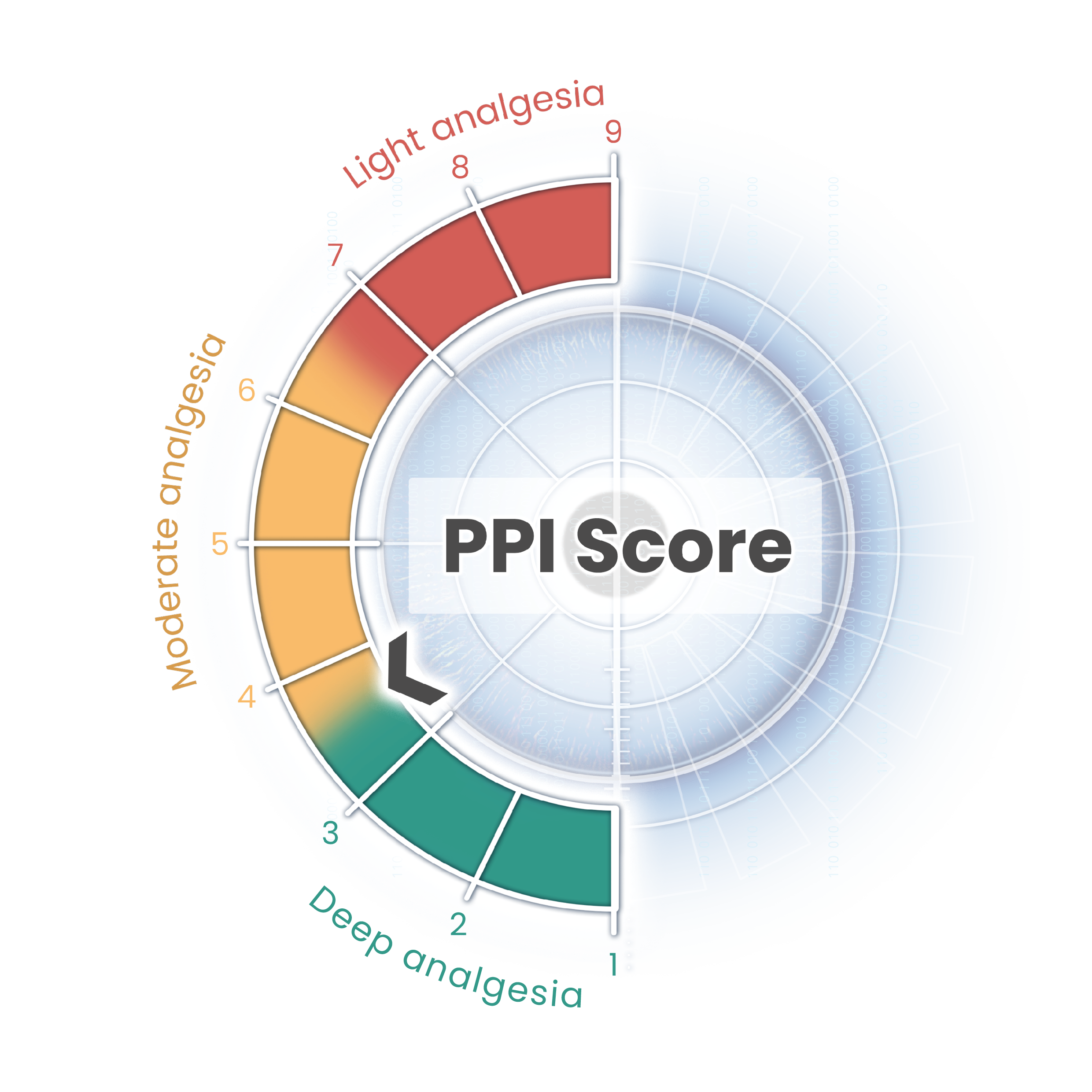
- PPI score interpretation – Standardized, reproducible index.
- Predictive value – Anticipates response to nociceptive stimuli before clinical manifestation.
- Individualized analgesia – Enables patient-specific adjustment and avoidance of under-/overdosing.
- Applicability under sedation – Remains valid in unconscious or deeply sedated patients.
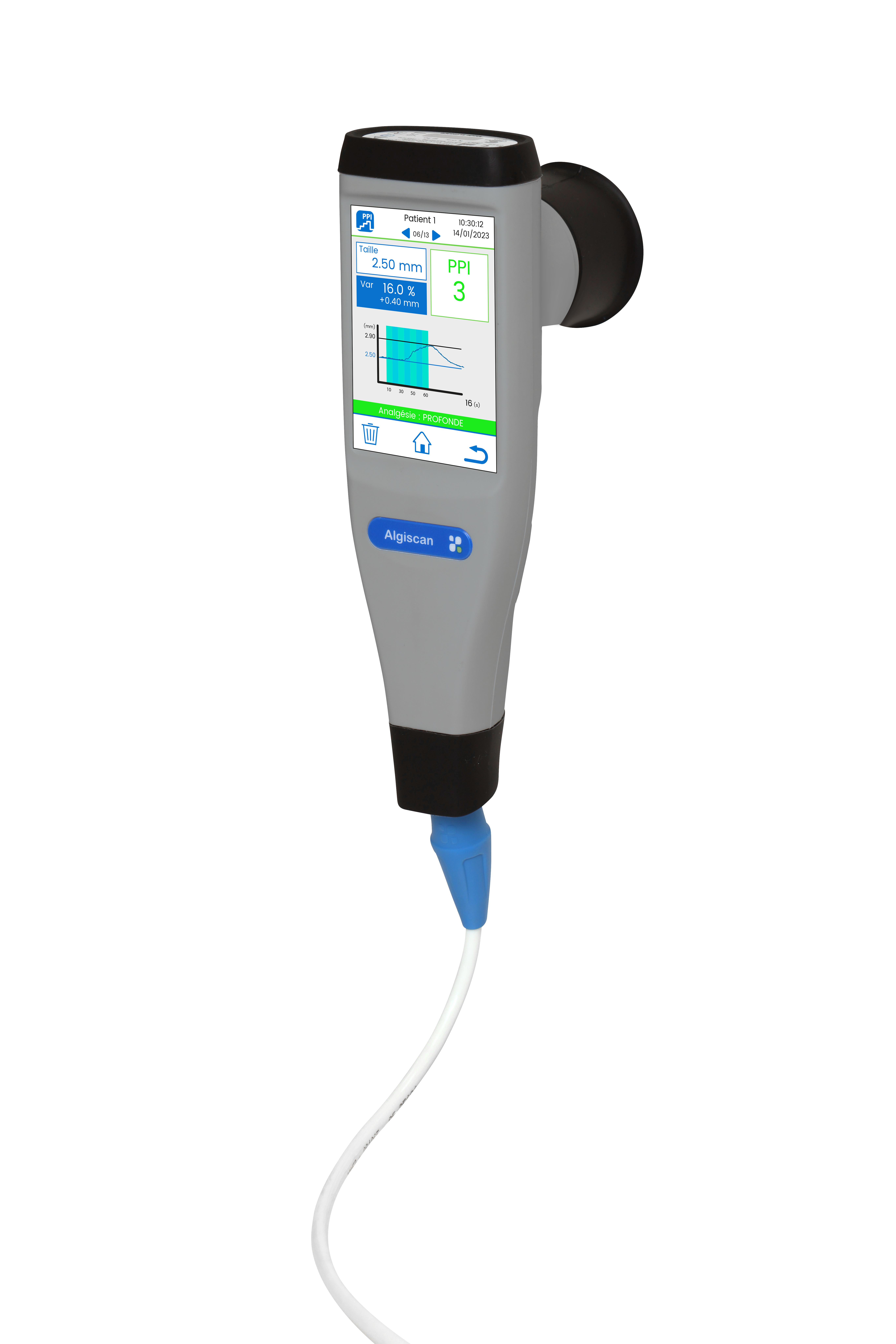
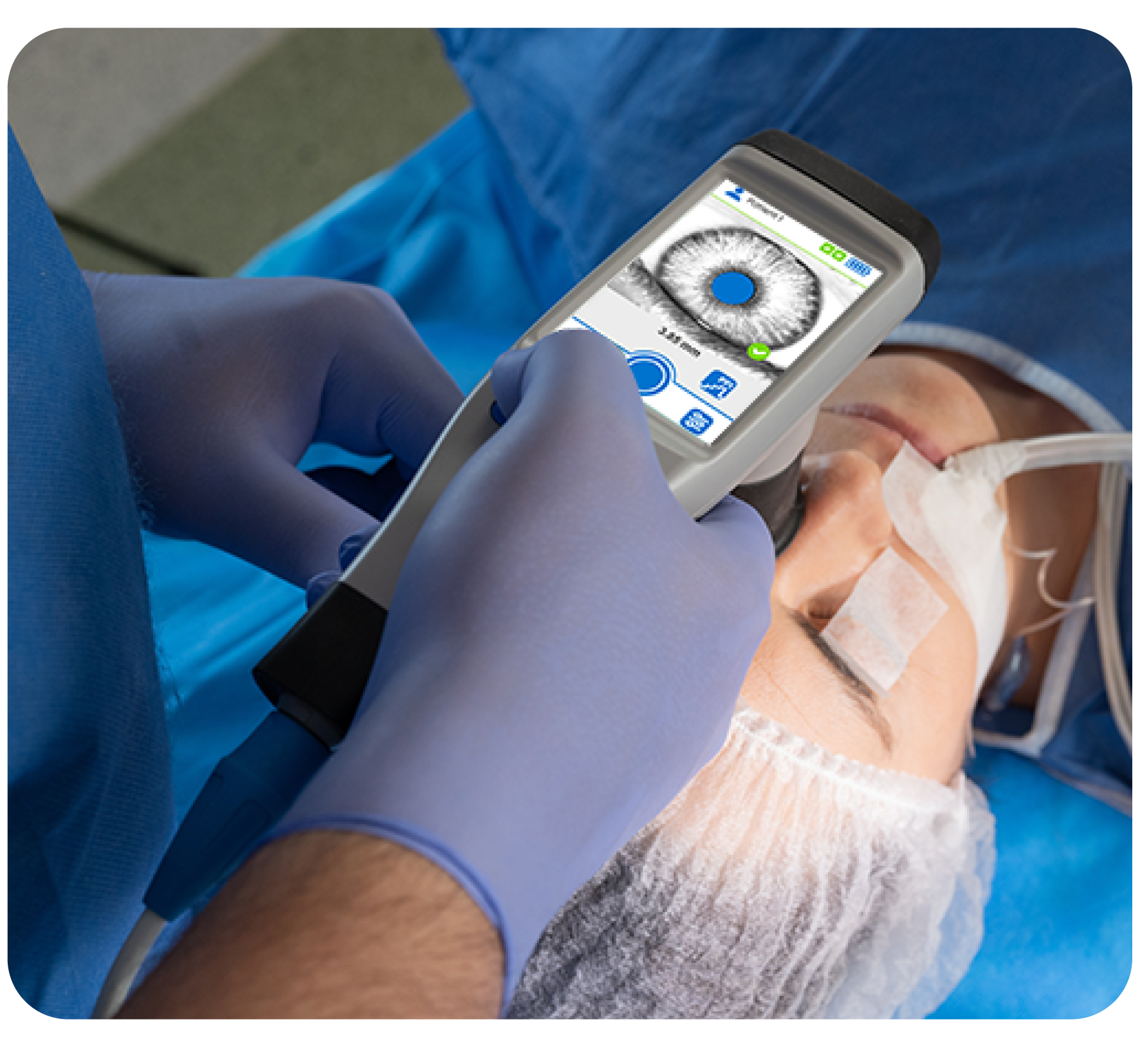
- Portable, non-invasive bedside device for ICU, OR, and recovery.
- Rapid, automated assessment based on controlled stimulation.
- No calibration required.
- Standardized, operator-independent protocol.
- Stored measurements support follow-up and comparison.
- Compatible across anaesthesia techniques.
Used for objective assessment of nociception in sedated or mechanically ventilated patients who cannot self-report pain, in ICU and OR. Enables titration of analgesia based on the Pupillary Pain Index rather than indirect autonomic signs.