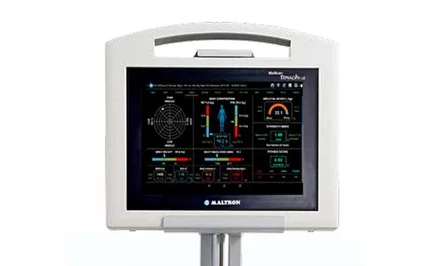
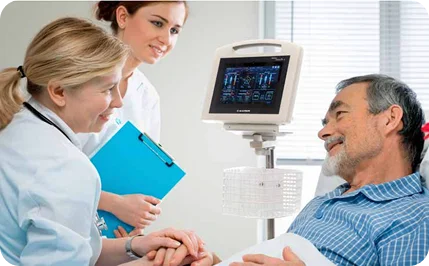
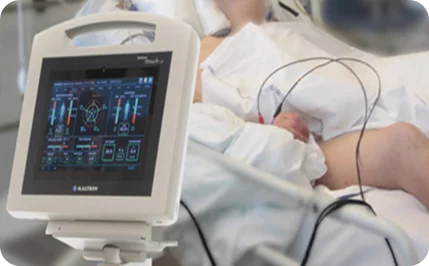
From numbers to physiology – bedside multi-frequency bioimpedance that quantifies what clinical assessment cannot.
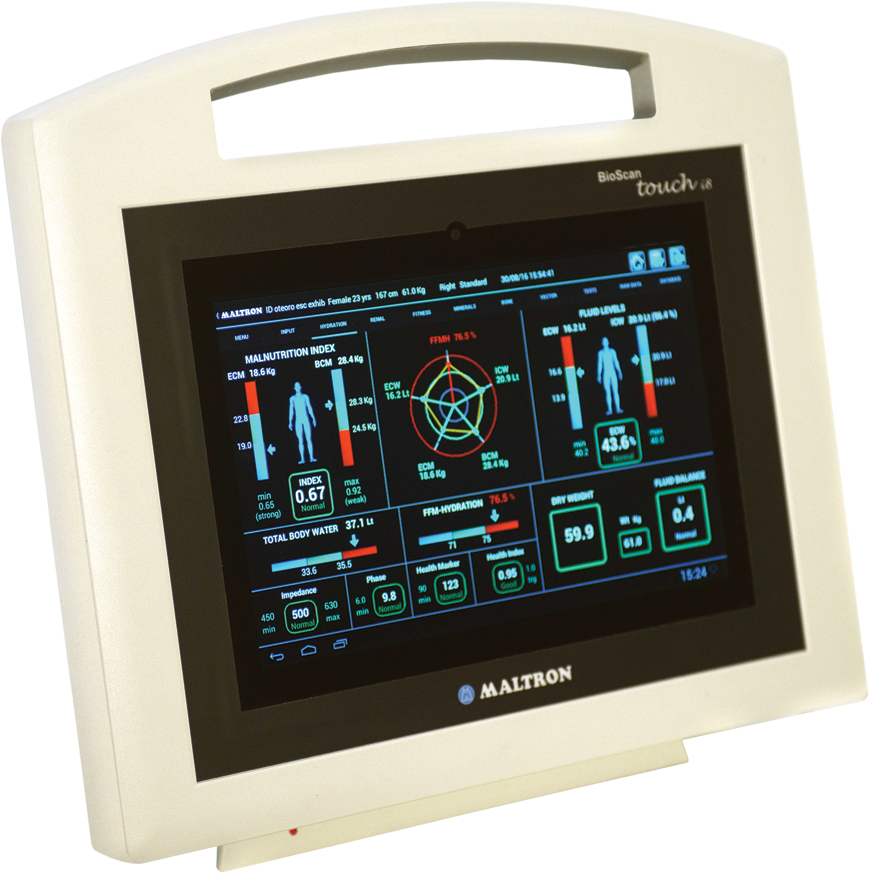
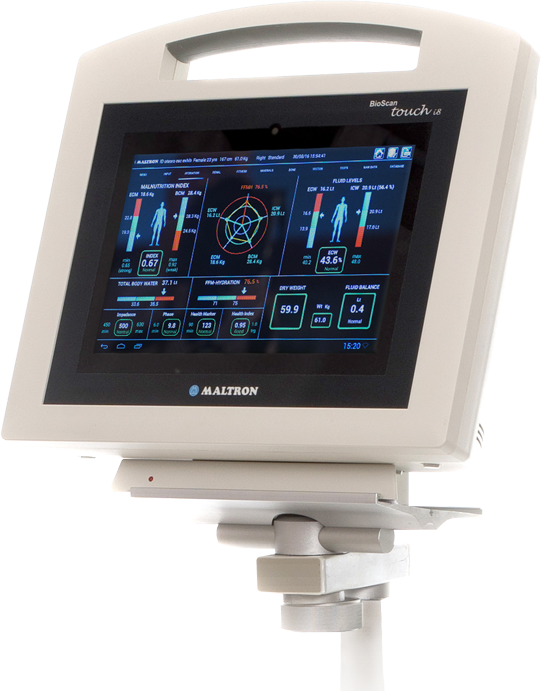
Clinical assessment of fluid status, body composition, and cellular condition remains indirect. BioScan i8 uses multi-frequency bioimpedance to deliver direct bedside measurement of intracellular and extracellular water, total body water, lean and fat mass, body cell mass, phase angle, and over 40 physiological parameters within seconds of a single assessment.
Multi-frequency bioimpedance – separates intracellular and extracellular fluid.
Direct compartment measurement – ICW, ECW, and total body water.
Body composition – lean mass, fat mass, body cell mass.
Phase angle – marker of cellular integrity and membrane function.
Rapid bedside assessment – full analysis within seconds.
ICU & PICU – Fluid compartment visibility for resuscitation and de-resuscitation strategies.
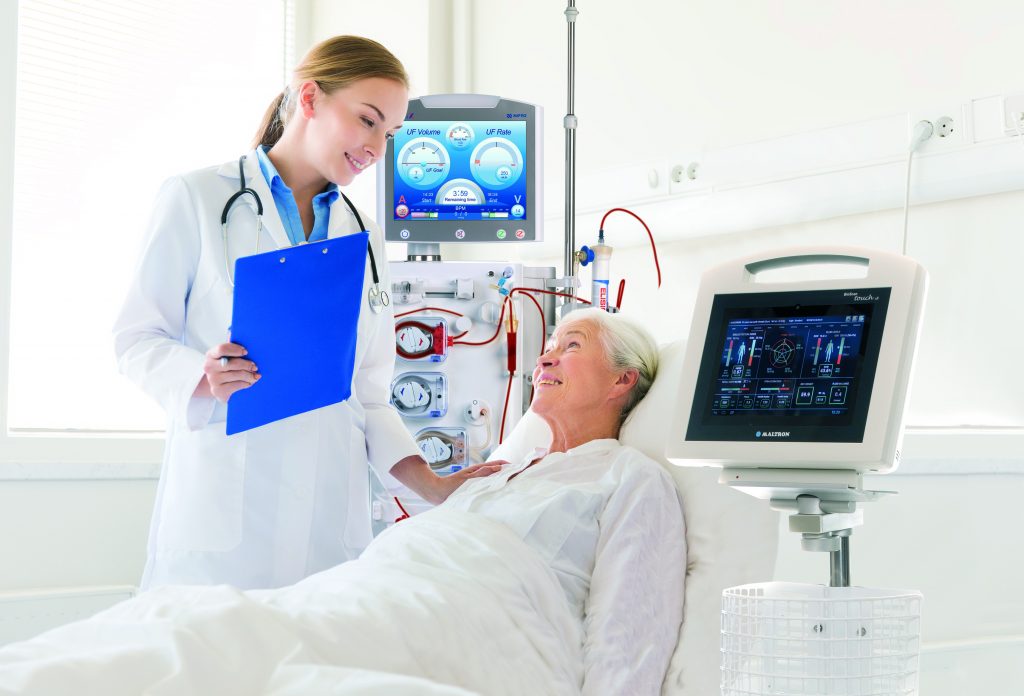
Nephrology & Dialysis – Objective definition of dry weight and volume status.
Clinical Nutrition – Body composition and cellular status for nutritional and metabolic assessment.
Maltron BioScan touch i8 – ICU & PICU
Where is the fluid – and what is it doing?
Clinical Overview
Volume status in critically ill patients is rarely reflected by fluid balance alone. BioScan i8 provides bedside measurement of intracellular and extracellular water, total body water, body composition, and phase angle – supporting fluid resuscitation and de-resuscitation decisions based on measured compartment physiology.
Key Clinical Benefits
Direct measurement of ICW, ECW, and total body water.
Phase angle as a marker of cellular integrity.
Body composition (lean mass, fat mass).
Repeatable bedside measurement for longitudinal tracking.
What This Enables
See distribution, not just balance – Distinguish intravascular, interstitial, and cellular compartments.
Identify hidden instability – Detect redistribution and altered hydration not visible clinically.
Guide therapy with physiology – Use measurable data to shape fluid and de-resuscitation strategies.
Track response over time – Repeatable measurements monitor treatment effect.
Clinical estimation of dry weight is often imprecise and drives both over- and under-hydration. BioScan i8 provides direct measurement of total body water and ICW/ECW distribution, supporting pre-, mid-, and post-dialysis decisions and longitudinal tracking of volume status across sessions.
Key Clinical Benefits
Direct measurement of ICW, ECW, and total body water.
Phase angle as a marker of cellular integrity.
Body composition (lean mass, fat mass).
Repeatable bedside measurement for longitudinal tracking.
What This Enables
See distribution, not just balance – Distinguish intravascular, interstitial, and cellular compartments.
Identify hidden instability – Detect redistribution and altered hydration not visible clinically.
Guide therapy with physiology – Use measurable data to shape fluid and de-resuscitation strategies.
Track response over time – Repeatable measurements monitor treatment effect.
What is the patient actually made of – and what is changing?
Clinical Overview
Weight and BMI do not reflect body composition, hydration, or cellular condition. BioScan i8 provides bedside measurement of lean mass, fat mass, body cell mass, phase angle, and hydration – enabling objective nutritional and metabolic assessment and longitudinal follow-up.
Key Clinical Benefits
Direct measurement of ICW, ECW, and total body water.
Phase angle as a marker of cellular integrity.
Body composition (lean mass, fat mass).
Repeatable bedside measurement for longitudinal tracking.
What This Enables
See distribution, not just balance – Distinguish intravascular, interstitial, and cellular compartments.
Identify hidden instability – Detect redistribution and altered hydration not visible clinically.
Guide therapy with physiology – Use measurable data to shape fluid and de-resuscitation strategies.
Track response over time – Repeatable measurements monitor treatment effect.
We use cookies to ensure that we give you the best experience on our website. If you continue to use this site we will assume that you are happy with it.